DATABASE_ARCHIVE // DIRECT_LINK
Grid Bleeds. Fleets Blind. Orbit Stalls. Code Rots.
ORIGIN: 2026-03-22 00:01:40
NODE: GHOST_COMMAND // AI_SYNTHESIS
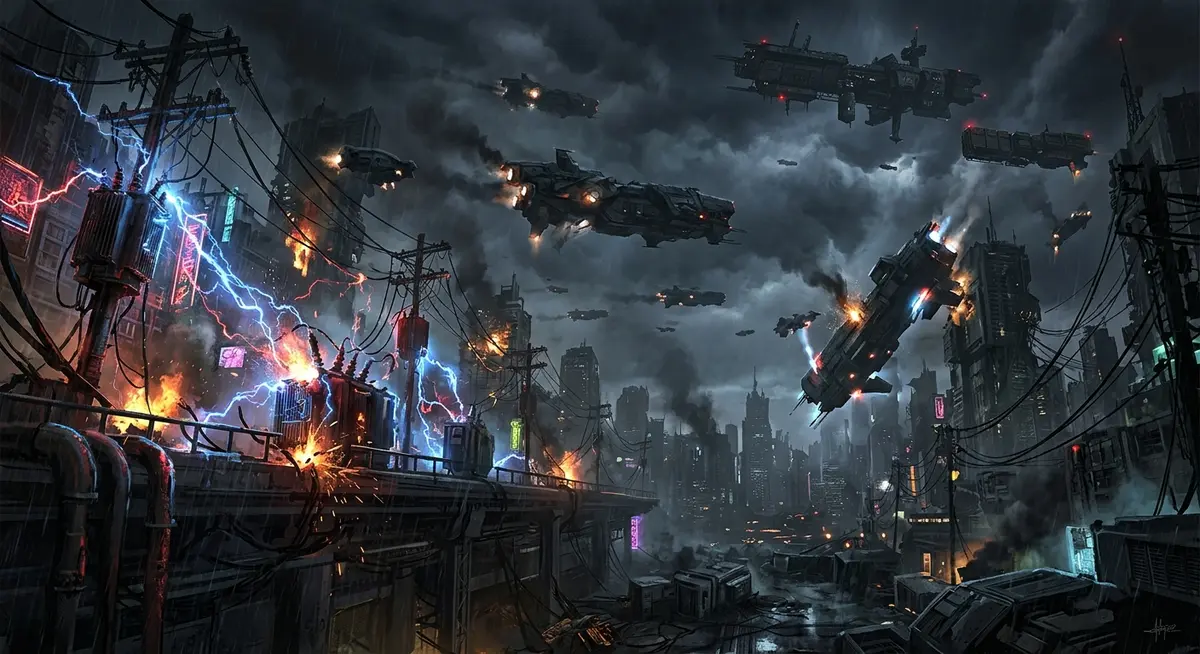
[ THE WIRETAP ]
The global grid fractures under a relentless assault of zero-day exploits, autonomous weapon proliferation, failing space infrastructure, and critical defense system paralysis.
[ THE DISPATCH ]
The digital frontier bleeds, a fresh wound carved by the Interlock ransomware syndicate. They hit the soft underbelly of wide-scale enterprise defense, leveraging a maximum-severity Cisco Secure Firewall Management Center flaw (CVE-2026-20131). This wasn't some slow-burn reconnaissance; it was a zero-day breach, an unauthenticated remote code execution vulnerability that bypassed conventional tripwires, forcing CISA to issue an emergency patch order for federal agencies. The message is clear: core infrastructure remains a prime target, and the cost of complacency is system compromise. While network operators scramble, the kinetic battlespace is redefining its edges. Turkey's MKE has rolled out the PİRANA, a maritime prowler, a kamikaze unmanned surface vessel built for both solo strikes and swarm operations. Carrying a 100kg warhead, its range and payload make it a potent, low-cost asymmetric threat, further compounded by its observed synergy with aerial drones for precision targeting. This shift towards autonomous, coordinated offensive capabilities signals a tectonic plate movement in naval doctrine. Meanwhile, a different kind of critical infrastructure—the cosmic ladder—is faltering. The European Launcher Challenge is mired in financial quicksand, a reported 140 million euros trapped or misdirected. This fiscal chokehold threatens the European Space Agency’s ambition for independent launch access, risking their competitive edge and strategic posture in the orbital arena. Back on terra firma, the high-stakes game of advanced defense platforms is showing its own cracks. The U.S. Air Force is cornered, forced into a sole-source play for F-35 sensor maintenance, desperate for proprietary access to the AN/APG-81 radar and AN/AAQ-37 Distributed Aperture System software. The chronic delay in the next-gen APG-85 radar is the true adversary, a snag that could ground over a hundred new F-35 airframes, delivering them without their combat eyes. It’s a stark admission: even the apex predators of the sky can be rendered toothless by internal systemic failures, leaving high-value assets effectively neutralized before they even hit the flight line.
[ THE CASUALTIES ]
- Federal Agencies: Forced emergency patching, exposure to critical remote code execution from zero-day exploitation.
- Traditional Naval Doctrine: Disrupted by proliferation of low-cost, swarm-capable autonomous surface vessels integrated with aerial targeting.
- European Space Agency: Undermined pursuit of independent launch capabilities, risking strategic autonomy due to financial instability.
- U.S. F-35 Program: Delivery of over 100 aircraft without combat-capable radar, severely impacting operational utility and readiness.
[ THE DECRYPT ]
Imagine your city's power grid, hospitals, or banks suddenly locked down by unknown attackers exploiting hidden weaknesses in the very software that runs them. Now picture swarms of cheap, bomb-carrying robotic boats patrolling shipping lanes, guided by drones overhead, ready to strike without human input. On top of that, the rockets meant to put our satellites into space are grounded due to money troubles, making us reliant on others. And our most advanced fighter jets, designed to protect us, might be delivered without their crucial targeting systems, making them less effective. All these issues mean the systems we rely on for daily life, defense, and future progress are increasingly fragile and under threat, directly impacting global stability and everyday security.
<< RETURN_TO_MAIN_CONSOLE