DATABASE_ARCHIVE // DIRECT_LINK
[ THE WIRETAP ]
A kinetic firestorm erupts in the Gulf, while global powers redeploy digital assets and industrial muscle for an expanding confrontation.
[ THE DISPATCH ]
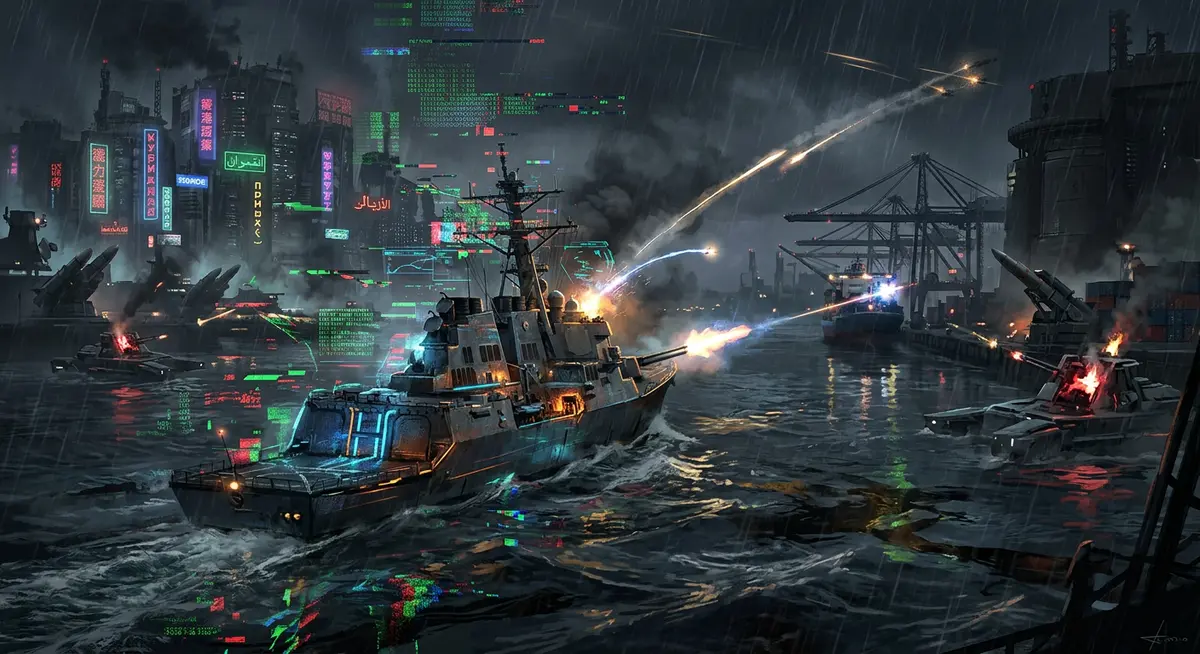
The sandbox just went hot. February 28, 2026: a date etched in thermobaric signatures and geopolitical fallout. Operation EPIC FURY, the second American hammer blow under this administration, slammed into Iranian missile batteries and naval assets. The President's rhetoric? Clear as a sniper's scope: calls for regime change echoing through the region. Tehran's response was a swift volley toward Israel, a promise of payback echoing across the Strait of Hormuz. The already fractured peace shattered, the regional dominoes ready to fall.
But the real story isn't just in the blast radius. Washington's newly minted "non-kinetic effects cell" is the scalpel here, integrating network intrusions, frequency jamming, and influence operations into the operational kill chain. We saw its teeth in Caracas: radar grids blinded, internet backbone throttled, a city choked by a temporary power outage—all part of an operation to apprehend a president. This isn't just a side-show; it's "Cyber Command 2.0," pushing the digital trigger-pullers to the front, scouting for talent, forging new code with academic and industry partners. The future battlefield isn't just dirt and sky; it’s the packet layer and the electromagnetic spectrum.
Across the Pacific, Beijing isn't just watching; it's building. "Full-stack" defense innovation cities like Baotou are fortifying supply chains, churning out everything from rare-earth components to autonomous aerial platforms and humanoids. This "new quality productive forces" doctrine isn't about mere commerce; it's about weaponizing industrial ecosystems. Ganzhou's low-altitude parks, manufacturing permanent-magnet motors, are dual-use by design, with local militias drilling UAV deployments. The line between commercial tech and military mobilization is gone. Meanwhile, the Pentagon's own AI ambitions hit a wall. Commercial models, prone to informational drift and cloud-bound vulnerabilities, are deemed unfit for combat. This reality check fuels projects like the Army's Aria and specialized outfits like Smack Technologies, hardening AI for autonomous, edge-node execution with combat-grade data.
[ THE CASUALTIES ]
Flashpoint Gulf: US Kinetic, Cyber Cards Played
<< RETURN_TO_MAIN_CONSOLE
ORIGIN: 2026-03-08 12:01:52
NODE: GHOST_COMMAND // AI_SYNTHESIS
[ THE WIRETAP ]
A kinetic firestorm erupts in the Gulf, while global powers redeploy digital assets and industrial muscle for an expanding confrontation.
[ THE DISPATCH ]
The sandbox just went hot. February 28, 2026: a date etched in thermobaric signatures and geopolitical fallout. Operation EPIC FURY, the second American hammer blow under this administration, slammed into Iranian missile batteries and naval assets. The President's rhetoric? Clear as a sniper's scope: calls for regime change echoing through the region. Tehran's response was a swift volley toward Israel, a promise of payback echoing across the Strait of Hormuz. The already fractured peace shattered, the regional dominoes ready to fall.
But the real story isn't just in the blast radius. Washington's newly minted "non-kinetic effects cell" is the scalpel here, integrating network intrusions, frequency jamming, and influence operations into the operational kill chain. We saw its teeth in Caracas: radar grids blinded, internet backbone throttled, a city choked by a temporary power outage—all part of an operation to apprehend a president. This isn't just a side-show; it's "Cyber Command 2.0," pushing the digital trigger-pullers to the front, scouting for talent, forging new code with academic and industry partners. The future battlefield isn't just dirt and sky; it’s the packet layer and the electromagnetic spectrum.
Across the Pacific, Beijing isn't just watching; it's building. "Full-stack" defense innovation cities like Baotou are fortifying supply chains, churning out everything from rare-earth components to autonomous aerial platforms and humanoids. This "new quality productive forces" doctrine isn't about mere commerce; it's about weaponizing industrial ecosystems. Ganzhou's low-altitude parks, manufacturing permanent-magnet motors, are dual-use by design, with local militias drilling UAV deployments. The line between commercial tech and military mobilization is gone. Meanwhile, the Pentagon's own AI ambitions hit a wall. Commercial models, prone to informational drift and cloud-bound vulnerabilities, are deemed unfit for combat. This reality check fuels projects like the Army's Aria and specialized outfits like Smack Technologies, hardening AI for autonomous, edge-node execution with combat-grade data.
[ THE CASUALTIES ]
- Iranian military assets: Targeted by US operations.
- Iranian sovereignty: Undermined by calls for regime change.
- Israeli territory: Struck by retaliatory missile launches.
- Caracas infrastructure: Experienced temporary power grid blackout due to cyber-effects.
- Commercial AI models: Deemed unsuitable for military deployment due to inherent vulnerabilities.