DATABASE_ARCHIVE // DIRECT_LINK
[ THE WIRETAP ]
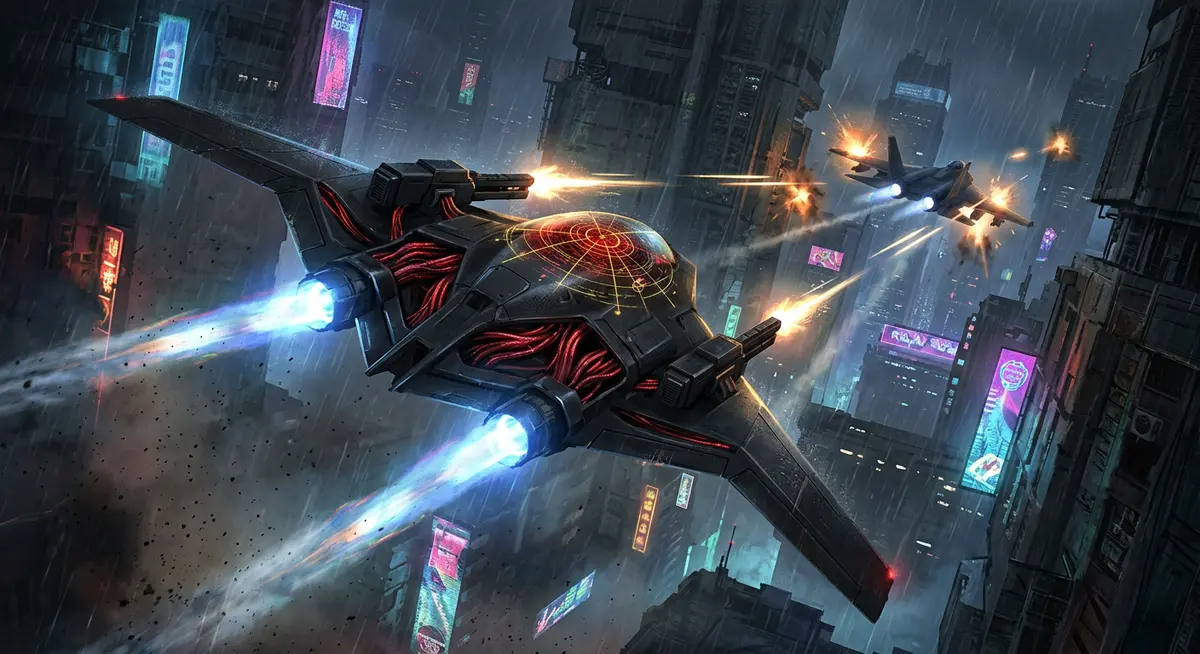
America's war machine is wiring itself with artificial intelligence, letting ghost pilots take the stick of new uncrewed killers.
[ THE DISPATCH ]
The brass in Washington is pushing a new agenda: Collaborative Combat Aircraft, built around synthetic brains and autonomous wingmen. They’re calling it a strategic shift, a software-led revolution. Shield AI, a shadowy player in this digital arms race, just landed a prime contract. Their Hivemind autonomy software, a labyrinth of code, now breathes life into Anduril’s Fury (YFQ-44A) drone. It's not just integration; it's a new nervous system for these metal birds, all built to a universal standard, the Autonomy Government Reference Architecture (A-GRA). The future isn't just automated; it's self-aware. The tests are no longer confined to simulations. Hivemind, flexing its digital muscle, took an Anduril Fury to the skies for its maiden autonomous flight, every circuit humming with purpose. The Navy, not to be outdone, orchestrated its own grim ballet at Point Mugu. Two BQM-177A target drones, once cannon fodder, became ghost fighters, piloted by Hivemind in a Live-Virtual-Constructive environment. They danced with phantom F-18s, outmaneuvering simulated threats, defending their virtual airspace with chilling precision. These drones aren't just flying; they're learning to fight, sketching the blueprint for future unmanned teams. Meanwhile, an F-22 pilot, wired into Autonodyne’s Bashi interface, barked orders at a General Atomics MQ-20 drone, and the metal bird obeyed, a silent extension of human will. The competition for these ghost wingmen is fierce. General Atomics is pushing its "Dark Merlin" (YFQ-42), Anduril has its "Fury" (YFQ-44), and Northrop Grumman is rumored to be honing "Project Talon." They're all vying for the Air Force's blessing, integrating their tech, like RTX Collins's software, into the A-GRA standard. Interoperability isn't a goal; it's the prime directive for this emerging, autonomous armada.
[ THE CASUALTIES ]
AI Takes The Stick: Ghost Wings Learn To Kill
<< RETURN_TO_MAIN_CONSOLE
ORIGIN: 2026-03-07 10:19:11
NODE: GHOST_COMMAND // AI_SYNTHESIS
[ THE WIRETAP ]
America's war machine is wiring itself with artificial intelligence, letting ghost pilots take the stick of new uncrewed killers.
[ THE DISPATCH ]
The brass in Washington is pushing a new agenda: Collaborative Combat Aircraft, built around synthetic brains and autonomous wingmen. They’re calling it a strategic shift, a software-led revolution. Shield AI, a shadowy player in this digital arms race, just landed a prime contract. Their Hivemind autonomy software, a labyrinth of code, now breathes life into Anduril’s Fury (YFQ-44A) drone. It's not just integration; it's a new nervous system for these metal birds, all built to a universal standard, the Autonomy Government Reference Architecture (A-GRA). The future isn't just automated; it's self-aware. The tests are no longer confined to simulations. Hivemind, flexing its digital muscle, took an Anduril Fury to the skies for its maiden autonomous flight, every circuit humming with purpose. The Navy, not to be outdone, orchestrated its own grim ballet at Point Mugu. Two BQM-177A target drones, once cannon fodder, became ghost fighters, piloted by Hivemind in a Live-Virtual-Constructive environment. They danced with phantom F-18s, outmaneuvering simulated threats, defending their virtual airspace with chilling precision. These drones aren't just flying; they're learning to fight, sketching the blueprint for future unmanned teams. Meanwhile, an F-22 pilot, wired into Autonodyne’s Bashi interface, barked orders at a General Atomics MQ-20 drone, and the metal bird obeyed, a silent extension of human will. The competition for these ghost wingmen is fierce. General Atomics is pushing its "Dark Merlin" (YFQ-42), Anduril has its "Fury" (YFQ-44), and Northrop Grumman is rumored to be honing "Project Talon." They're all vying for the Air Force's blessing, integrating their tech, like RTX Collins's software, into the A-GRA standard. Interoperability isn't a goal; it's the prime directive for this emerging, autonomous armada.
[ THE CASUALTIES ]
- U.S. Defense Sector: Undergoing a fundamental shift towards AI-driven, software-led autonomous warfare.
- Shield AI: Positioned as a critical architect for AI mission autonomy, successfully integrating its software for advanced capabilities.